The pandemic hit the third sector hard like many other sectors. Fundraising events were cancelled, charity shops closed, face-to-face fundraising became impossible. Moreover, donors became increasingly concerned about their economic position, further reducing charities’ income. All the while the economic fallout of the pandemic more than doubled the demand for some of their services. Yet, volunteers worked hard to meet the increased need for their services, often coming up with creative ways to carry on fundraising and helping those in need in accordance with government restrictions. Despite facing similar struggles of financial difficulties and the closure of spaces, faith communities have also risen above and displayed their resilience.
Research led by the Nottingham Trent University, the National Council for Voluntary Organizations (NCVO), and Sheffield Hallam University revealed that the impact of the pandemic has been “uneven and unpredictable”. While nearly a third (31%) of respondents had reported an increase in total income since last year, 47% said income had dropped (Nottingham Trent University, Sheffield Hallam University, and NCVO, 2021). The research also underlines that while the pandemic has put the sector under immense pressure, individual charities’ experiences vary widely – while 43% of respondents have reduced their range of services since March 2020, 37% have widened their range of services (ibid.).
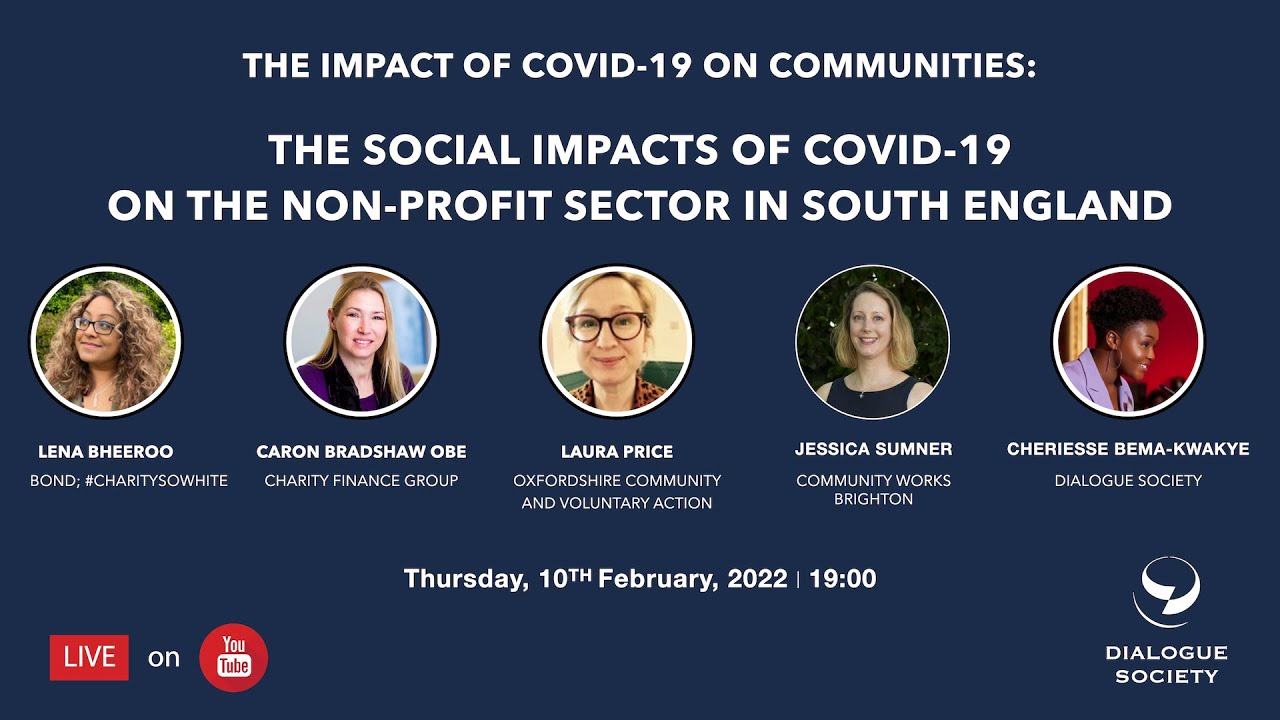
With a specific focus on the sociological impacts on the third sector in the South of England, this panel discussion aims to facilitate a dialogue discussing changes and possible difficulties faced during the pandemic, to synthesise and present practical, workable solutions.
References
Nottingham Trent University, Sheffield Hallam University and NCVO (2021) Online: https://www.ncvo.org.uk/about-us/media-centre/press-releases/2793-pandemic-impact-on-charities-continues-to-be-uneven-but-funding-challenges-are-on-horizon-research-show [Accessed: January 2022].